

What makes a group menu feel thoughtful is not necessarily offering something different to every guest. It is choosing a format that suits the gathering and gives people a comfortable way to share a meal. Planning a customized group menu in Lodi can feel like a balancing act when tastes, dietary needs, and the occasion all pull in different directions. A useful starting point is to define the event, then shape the menu around the people coming together. For a customized group menu Lodi hosts can make more manageable, begin with the gathering’s purpose and a clear picture of the guests.
This guide explains how to choose a menu format, collect guest preferences and dietary information, and turn those details into a focused plan. At The Oxford Kitchen & Gastropub in downtown Lodi, customized group menus, personalized dining coordination, and private and semi-private event spaces help hosts bring people together over a meal. Whether guests are coming from Lodi, Stockton, Galt, Elk Grove, Lockford, or Woodbridge, a clear plan can make the experience feel welcoming and connected to the occasion.
Key Takeaways
- Start with the occasion and gathering style to set a menu direction that fits the group.
- Collect guest preferences and dietary details early, and distinguish essential needs from general likes.
- Compare shared dishes, a set menu, and limited choices to find a format that balances flexibility with simpler coordination.
- Use a short checklist to organize the guest count, meal purpose, preferences, and menu priorities before planning.
- Explore how The Oxford’s personalized dining coordination and event spaces can support a customized group menu for a Lodi gathering.
Why a Customized Group Menu Makes a Lodi Gathering Feel More Thoughtful
A group meal often brings together people with different tastes, routines, and expectations. Some guests may want to linger over dinner, while others may prefer a straightforward lunch that leaves room for conversation or a work agenda. Trying to plan a separate meal for every person can make decisions harder to coordinate. Instead, identify the gathering’s shared purpose and choose a menu approach that welcomes the group as a whole.
A customized group menu aligns the food and dining format with the occasion and its guests. That does not mean creating a different experience for each person. It means making considered decisions about the meal’s tone, structure, and variety while keeping the plan cohesive. For hosts planning a customized group menu in Lodi, the occasion, group size, and way guests will dine together are practical first guides.
Start with the occasion, not a list of dishes
For a family gathering, an easygoing pace may leave time to catch up around the table. A business dinner may benefit from a more composed flow that makes space for conversation and the meeting’s purpose. Start by asking how you want guests to feel, how much time the meal has, and whether dining is the main event or one part of a larger program.
Then consider the group size and setting. A smaller gathering may suit a more personal dining rhythm, while a larger group often benefits from a coordinated plan that keeps decisions straightforward. A seated meal, a celebration, and a reception also create different expectations for how guests eat and mingle. Downtown Lodi offers a local setting for a gathering without requiring the menu to follow a particular theme. Hosts can explore Lodi, California as they think about what makes the event meaningful to guests, including those traveling from nearby Stockton, Galt, Elk Grove, Lockford, or Woodbridge.
Give the group a shared dining experience
Thoughtful customization starts with common ground. Consider what the guests are likely to enjoy, then account for relevant preferences and dietary needs as the plan takes shape. Gathering this information early helps you make considered choices instead of trying to resolve every request at the table. Share the details during menu planning so they can be weighed alongside the occasion and the overall dining format.
A cohesive plan also makes the host’s role easier. Rather than tracking a long list of individual orders, you can focus on a menu direction that feels welcoming and suits the gathering. The Oxford Kitchen & Gastropub offers customized group menus and personalized dining coordination for gatherings in downtown Lodi, bringing the event’s purpose and guest considerations into one dining plan. This gives the meal a personal feel without making the planning unnecessarily complicated.
How to Design a Customized Group Menu, Step by Step
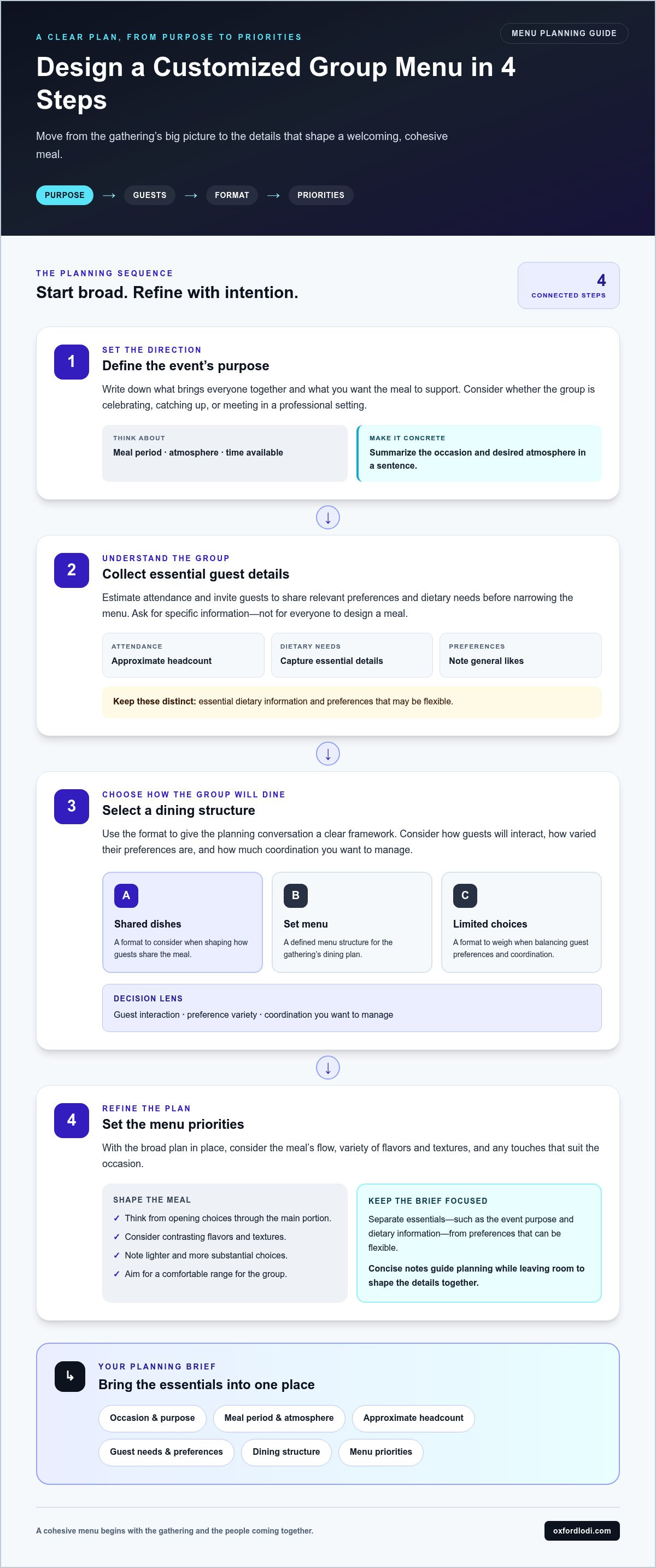
A clear plan keeps menu decisions tied to what the gathering needs. Work from the broad picture toward the details: define the event, understand who is attending, choose a dining structure, and then refine the menu priorities. This order helps distinguish essentials from optional touches, so planning a customized group menu in Lodi does not become a long list of individual requests.
Define the gathering and its guests
Begin with the occasion, meal period, approximate headcount, and atmosphere you want to create. Is the group celebrating, catching up, or meeting in a professional setting? Next, collect guest preferences and dietary information before narrowing the menu. These basics form a useful planning brief and keep early decisions focused on details that can shape the whole meal.
- Set the event’s purpose. Write down what brings everyone together and what you want the meal to support. A milestone celebration may call for time to linger, while a work gathering may need a more streamlined pace. Summarize the occasion and desired atmosphere in a sentence.
- Collect essential guest details. Estimate attendance and identify the meal period, then invite guests to share relevant preferences and dietary needs. Ask for specific information rather than asking everyone to design a meal. You can share the responses during menu planning.
- Choose a dining structure. Consider shared dishes, a set menu, or a limited-choice format. Think about how guests will interact, how varied their preferences are, and how much coordination you want to manage. The format gives the planning conversation a clear framework.
- Refine the priorities. Once the broad plan is set, consider the meal’s flow, variety of flavors and textures, and any touches that suit the occasion. Keep essential details, such as the event purpose and dietary information, separate from preferences that can be flexible.
Shape a balanced menu brief
Describe the meal from its opening choices through its main portion, considering how each part will work with the next. A useful brief asks for variety without assuming particular dishes: note a preference for contrasting flavors, lighter and more substantial choices, or a comfortable range for the group. Keep the notes concise enough to guide planning while leaving room to shape the details together.
Before planning, gather these points in one place:
- Event essentials: Occasion, meal period, approximate headcount, and preferred atmosphere.
- Guest considerations: Reported dietary needs and preferences, clearly distinguished from one another.
- Menu priorities: Desired meal flow, variety, and the level of choice that suits the group.
This short brief gives personalized dining coordination a practical starting point. Bring the occasion and guest details together with The Oxford’s group dining coordination as you shape a welcoming plan.
Compare Group Menu Formats to Find the Right Fit
The format affects more than what guests eat. It shapes how they interact, how much choice they have, and how many decisions the host coordinates. Shared dishes, a set menu, and limited choices are useful planning frameworks. The right fit depends on the occasion, guest preferences, and pace you want for the meal.
| Format | Guest experience | Choice level | Organizer coordination |
|---|---|---|---|
| Shared dishes | Communal and conversational, with food enjoyed together | Guests choose from selections placed for the group | Consider comfort with sharing and how selections work for the group |
| Set menu | Consistent, with a planned progression for the meal | More defined, with guests following the same overall plan | Fewer individual decisions, with preferences gathered in advance |
| Limited-choice approach | Structured, while offering guests some personal say | A small number of planned alternatives | Collect choices clearly and keep the options easy to communicate |
When shared choices suit a social gathering
Shared selections can create a communal feel at a relaxed celebration or reunion, giving guests a natural reason to talk and pass dishes around. This approach suits groups comfortable sharing food and occasions with a leisurely, social rhythm. If guests have different dietary needs or preferences, include those in the planning rather than assuming everyone will enjoy the same selections.
When a set or limited-choice menu can simplify planning
A set menu gives the meal a clear shape, which can suit a gathering where consistency and a planned dining flow matter. A limited-choice approach offers some personal preference while keeping decisions manageable. For example, guests can choose from a small number of planned alternatives in advance. In either case, make the options easy to understand and collect responses in a consistent format.
For a larger group, fewer choices can make coordination clearer, but simplicity should not mean overlooking meaningful differences among guests. Look for preferences that overlap and identify where a planned alternative could help more people feel considered. Keep dietary details separate from general favorites so essential needs remain visible as the format takes shape.
No single structure fits every gathering. Shared choices may suit a social celebration, while a formal or tightly scheduled meal may benefit from a clearer progression. A customized group menu Lodi hosts plan should reflect both the event’s character and how guests will dine together. Weigh those factors before settling on a format, then use that decision to guide the menu conversation.
Use This Guest-and-Menu Checklist Before Finalizing the Plan
Before settling on menu details, bring the practical information together. A clear picture of who is attending, why they are gathering, and what matters to them turns broad ideas into a useful planning conversation. Clear guest details help the restaurant coordinate a more considered group menu.
Collect preferences and dietary details responsibly
Invite guests to share relevant dietary needs and allergies, and keep those details distinct from general likes or dislikes. “Avoids an ingredient by preference” and “has an allergy to that ingredient” are different notes. For allergies, record the exact information guests provide and share it early during planning. This helps the dining team understand the request, but it does not mean every allergy or dietary requirement can be accommodated.
- Guest count: Record the expected number and note whether it may change.
- Dietary needs and allergies: Capture the details accurately, including which guest they relate to when appropriate.
- General preferences: Note meaningful likes or dislikes separately so they do not obscure essential dietary information.
- Response gaps: Identify guests whose information is still outstanding instead of assuming that missing details mean there are no needs.
Keep the request simple and direct. Ask guests to share relevant allergies, dietary needs, and strong preferences. A focused request is usually more useful than asking everyone to suggest menu ideas. Share the responses in a clear, organized form during planning.
Bring the event details together
Pair guest information with the event basics, then prepare one concise summary for the restaurant. This gives personalized dining coordination a practical starting point and helps keep menu decisions connected to the gathering.
- Occasion and purpose: State what brings the group together and whether the meal is for a celebration, conversation, or professional gathering.
- Meal period and headcount: Include the expected guest count and whether the gathering is planned around brunch, lunch, or dinner.
- Preferred menu approach: Note whether you are considering shared selections, a set structure, or a limited-choice format.
- Guest-facing priorities: Describe the atmosphere you want, such as a relaxed shared meal or a polished business gathering.
- Menu priorities: Summarize preferences for variety, meal flow, and the overall dining experience without assuming specific dishes.
Menu details can change with the season, so use current information when discussing particular items rather than building the plan around assumptions. For a customized group menu in Lodi, an accurate brief keeps the conversation focused on the occasion and guests. Bring your event details and guest notes together with The Oxford’s group menu planning.
Plan Your Customized Group Menu with The Oxford in Downtown Lodi
A group meal comes together more easily when the menu reflects why everyone is gathering. The Oxford Kitchen & Gastropub in downtown Lodi offers customized group menus and personalized dining coordination for gatherings and corporate functions. Hosts can bring the event details and guest considerations into one planning conversation, shaping a meal around the occasion rather than relying on a one-size-fits-all approach.
The Oxford’s private and semi-private event spaces provide settings for bringing people together, while personalized coordination connects the gathering’s needs with menu preferences. Whether you are planning a family celebration or a professional event, begin with the experience you want guests to share. A customized group menu Lodi hosts plan with that purpose in mind can make dining feel considered without making the planning feel complicated.
What to bring into the planning conversation
A concise summary gives the dining team a clear picture of your event. Include its purpose, anticipated headcount, meal period, and preferred menu structure, such as shared selections or a more defined set of choices. Add guest preferences and dietary details in straightforward language, distinguishing allergies from general likes or dislikes. These notes focus the discussion on the experience you want guests to enjoy.
- Occasion: What brings everyone together, and what should the meal feel like?
- Headcount: How many guests are expected, and are any responses still outstanding?
- Meal period: Is the gathering planned around brunch, lunch, or dinner?
- Menu direction: What kind of dining structure and overall feel do you have in mind?
- Guest details: What dietary needs, allergies, and strong preferences should inform planning?
It also helps to identify what matters most. You might prioritize an unhurried shared meal, a polished atmosphere for a business gathering, or a thoughtful range of choices. Mark these as priorities rather than treating every preference as a fixed requirement. That distinction gives the planning conversation room to find a cohesive direction.
Take the next step for a Lodi gathering
Bring your notes together and use them as a starting point for planning with The Oxford. Personalized dining coordination helps align the occasion, guest details, and menu preferences so the gathering feels welcoming and the choices work as a whole. The Oxford’s private and semi-private event spaces offer a downtown Lodi setting for groups to share a meal and connect, including guests coming from Stockton, Galt, Elk Grove, Lockford, and Woodbridge.
Explore group dining at The Oxford and start shaping a gathering around the people coming together. Plan a gathering with The Oxford Kitchen & Gastropub.
Make Your Next Gathering Easy to Look Forward To
A good gathering leaves room for people to enjoy one another, not just admire the plan behind it. As you picture the event, think about how you want guests to feel: welcomed, celebrated, or glad they had time to connect. That intention can guide the final decisions and make a customized group menu Lodi guests share feel like part of the occasion, not just a meal on the schedule.
At The Oxford Kitchen & Gastropub, customized group menus, personalized dining coordination, and private and semi-private event spaces in downtown Lodi give hosts a welcoming setting for bringing people together. Share what you are planning and the kind of experience you have in mind, then take the next step.
Plan a gathering with The Oxford Kitchen & Gastropub. Start planning a thoughtful shared meal for your next get-together.
Frequently Asked Questions
How do you plan a customized group menu?
Start by defining the occasion, meal period, and approximate guest count, then use guest input to guide the menu discussion. For a customized group menu in Lodi, prepare a short planning note with the event date, schedule constraints, and essential dietary details. For example, if the meal follows a meeting, mention that transition so the dining plan reflects how the group will arrive and gather, rather than treating the meal as a standalone event.
What should I include in a group menu request?
Share the event’s purpose, estimated attendance, preferred meal period, and the atmosphere you hope to create. Add known allergies, dietary needs, and strong preferences, distinguishing essentials from flexible wishes. It can also help to identify one person to coordinate decisions and communicate updates, especially if several guests are contributing feedback. A focused summary gives the restaurant a clearer sense of what matters most without turning the planning conversation into a list of individual orders.
How far in advance should I plan a group menu?
Begin planning once the event date and general arrangements take shape instead of relying on one deadline for every gathering. Allow time to collect guest information, consider the menu direction, and incorporate changes into the plan. The coordination needed depends on the event’s details. For a meal at The Oxford in downtown Lodi, sharing the essentials early gives the planning conversation a useful starting point.
Can a group menu accommodate different dietary needs?
Dietary needs can inform the planning discussion, so gather precise information from guests and pass it along clearly. Separate allergies from preferences, and do not judge suitability by a dish’s name or description alone. A guest with an allergy should share the specific allergen and relevant details directly rather than relying on another person’s summary. The restaurant can use this information to plan thoughtfully, but no menu should be assumed to meet every requirement in every situation.
What is the difference between a set menu and a limited-choice menu?
A set menu follows a consistent plan for the group, while a limited-choice menu gives guests a small number of planned alternatives. Consider how much individual selection your gathering needs: a group following one shared schedule may value a uniform plan, while guests with varied preferences may appreciate some flexibility. These formats help guide the planning conversation and shape a menu around the group.
How do I choose a menu for a business dinner in Lodi?
Let the meeting’s purpose and schedule guide the meal’s structure. If conversation is central, consider a format that gives guests time to talk. If dinner sits within a packed agenda, a more streamlined plan may be practical. Before planning with The Oxford’s dining team, identify schedule constraints and collect attendee dietary information. A clear brief helps personalized coordination support the business gathering without letting menu decisions take over the meeting.
When should I share allergy information for a group meal?
Share allergy information as early as possible in the menu-planning conversation, and update the restaurant if a guest provides new details. Be specific about the allergen and which guest the information concerns, rather than using broad descriptions that could be misunderstood. Do not assume an item is safe based on its name or appearance. Guests with allergies should rely on clear information about ingredients and preparation before deciding what to eat.
What details help a restaurant customize a group menu?
A useful planning note covers the occasion, headcount, meal period, preferred dining style, and guest needs. Add the feeling you want to create, such as a lively family celebration or a composed business meal, and flag which preferences are priorities versus optional touches. The Oxford Kitchen & Gastropub provides personalized dining coordination for group gatherings in Lodi. If guests are coming from Stockton, Galt, Elk Grove, Lockford, or Woodbridge, include any travel or arrival details that affect the gathering.


