
A full restaurant buyout in Lodi reserves the restaurant for one gathering. Guest capacity depends on the usable space and event layout, so there is no single capacity that applies to every venue.
When bringing people together, guest count is only one part of the decision. You’ll also want to understand the level of privacy, food and beverage options, and how much advance planning the event requires.
This guide explains what shapes capacity, how to plan a private setting, and how food, drinks, and booking details fit into your event. These considerations can help you decide whether a full buyout or private dining better suits your gathering.
Key Takeaways
- Match your guest list to the event layout, since seating arrangements and space use shape practical capacity.
- Clarify whether your event needs exclusive use of the venue or a private dining area within it.
- Plan the meal and bar service around your gathering’s pace, from the first welcome to the final course.
- Begin booking conversations early and have your preferred date, guest estimate, and event needs ready.
Is the space fully private?
A private dining room and a full restaurant buyout offer different levels of exclusivity. A private room gives your group a defined space while other diners may use the rest of the restaurant. A full buyout reserves the venue for one event. Practical capacity depends on usable floor space, seating, and setup, not simply the restaurant’s advertised dining capacity. A seated dinner needs room for tables and service paths, while a standing reception uses the space differently.
Clarify which spaces are included: a private room, connected event areas, or the entire restaurant. Ask whether guests share entrances, restrooms, or bar areas with other diners, since those details affect privacy. Capacity can shift with the layout, so compare the proposed floor plan with your guest count and event format. A presentation with chairs facing one direction, for example, needs a different arrangement from round tables for conversation.
The date, event duration, and space requested shape the booking plan. Share those details along with an estimated guest count, then establish which areas are reserved and when you can access them. A private dining room may suit a smaller gathering, while a full restaurant buyout is designed for events that need exclusive use of the venue.
Deposit, payment, cancellation, and refund terms differ by booking. Before committing, make sure the written agreement states any deposit, the payment schedule, cancellation deadline, and how refunds are handled.
There is no single standard list of inclusions for a full restaurant buyout. Confirm in writing whether the agreement covers exclusive venue access, food, beverages, service, setup, and cleanup. A dinner plan may outline the meal and bar arrangements, while a reception may use a different service format. Clear terms help you match the space and event plan to your guest count.
Food, beverage, and service responsibilities
A written event plan should bring together the menu, bar service, timing, and room setup. For a seated dinner, confirm how guests choose their meals, when courses are served, and how dietary needs are handled. For a reception, clarify whether food will be served at tables or arranged for guests to enjoy while mingling. These decisions shape the service flow and the space required.
Agree on beverage service before the event. Specify whether drinks will be hosted, limited to a set selection, or ordered individually. Note when service begins and ends, where drinks are served, and who handles requests. A clear plan sets expectations for guests and helps staff prepare for the event’s pace.
- Menu: Set the dishes, meal format, and process for communicating dietary requests.
- Bar: Define the beverage selection and how guests receive drinks.
- Timing: Align arrival, meal service, speeches, and any planned transitions.
- Staffing: Identify who coordinates service and responds to event needs.
Put responsibilities in writing before booking. The agreement should explain what the venue supplies, what the host organizes, and how changes to the guest count or schedule are handled. If speeches will take place between courses, for example, include that timing in the service plan. A designated event contact can help keep the host and service team aligned.
In Lodi, permit, noise, and alcohol-service requirements depend on applicable local rules and event details, including sound and beverage service. Set out in the event plan who is responsible for addressing each requirement; a private booking does not automatically settle them.
For a gathering with food and drinks, choose a service style that suits the occasion: a relaxed dinner, a reception with passed bites, or a toast alongside dinner. Clear choices give the kitchen and service team a practical plan to follow.
Advance notice for booking
Start planning a full restaurant buyout in Lodi once you have a preferred date and event format. A Friday evening reception, company dinner, and family celebration may each need a different arrangement. The date, estimated guest count, and level of exclusivity shape the booking conversation. Share these details together to make your request clear.
Prepare a short event brief for your first inquiry. Include the occasion, preferred and alternate dates, estimated attendance, and meal style. Note any speeches, presentations, or other scheduled moments. A retirement dinner with a toast, for example, needs a different flow from a casual reunion. A complete brief makes it easier to discuss space and service needs.
- Date: Provide your preferred date and flexible alternatives.
- Guests: Give an estimate, then update it as invitations are answered.
- Format: Describe a seated meal, reception, or mixed schedule.
- Details: Share timing needs, dietary requests, and planned activities.
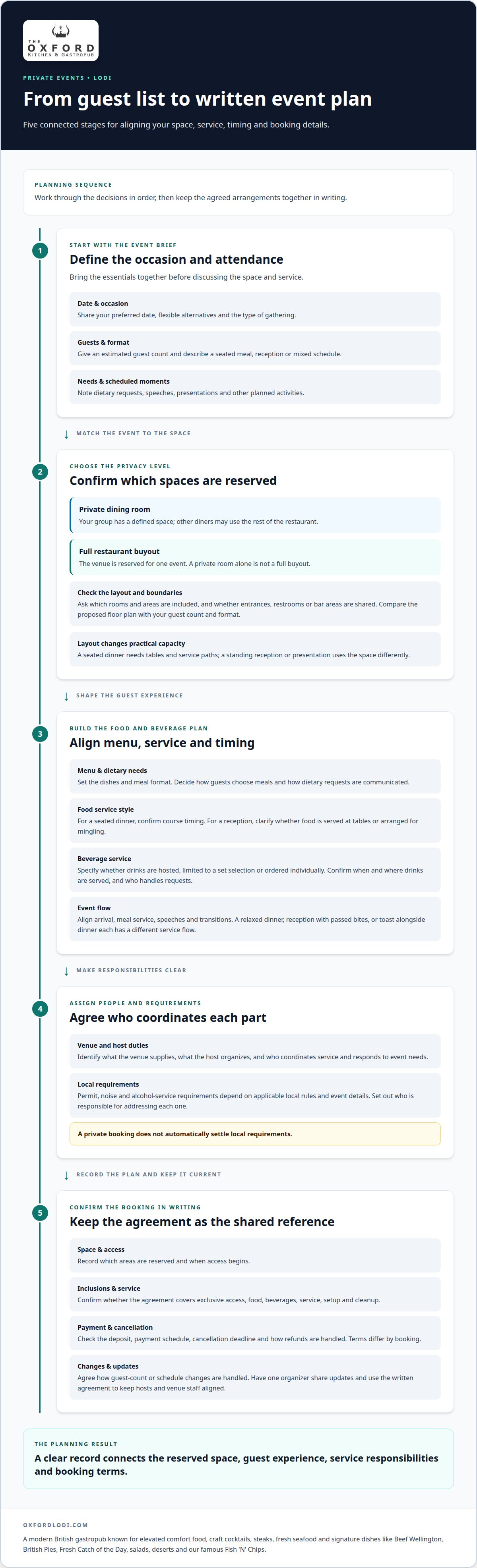
Settle the main event decisions in sequence. First, establish which space or spaces the booking covers. Next, align the meal service and beverage plan with the schedule. Then, record the agreed arrangements, payment terms, and cancellation conditions in writing. This keeps key decisions clear before invitations go out.
Choose one person to manage updates. The organizer can share a revised guest estimate, communicate menu needs, and report schedule changes. If the date or format changes, pass that information along promptly because it may affect the space plan. Before the event, use the written agreement as the shared reference for access, service, and timing. A clear planning record helps hosts and venue staff stay aligned.
Full restaurant buyout
A full buyout reserves the restaurant as one event space rather than setting aside a private dining room. That distinction matters for a Lodi gathering where guests need exclusive use for dinner, speeches, or a reception. Ask for a clear description of which guest areas are included, such as dining rooms, bar areas, and adjoining event spaces.
Which restaurants in Lodi, California offer full restaurant buyouts? Look for restaurants that explicitly agree to reserve the entire venue for one private event. Booking a private room alone is not a full buyout, so check that the event terms specify exclusive venue use.
Capacity depends on how the restaurant is arranged for your event. A seated meal needs tables, chairs, and clear service paths; a standing reception uses the room differently and may accommodate a different guest count. Ask for a proposed layout based on your event format, then compare it with your expected attendance. A room’s maximum capacity is not necessarily comfortable for every setup.
Map the event from arrival to departure before committing. Identify the welcome area, dining or reception space, and any planned transitions, such as moving from cocktails to dinner. Then confirm the schedule, food and beverage plan, setup responsibilities, and access times in writing. A company dinner may need time for remarks before the meal, while a family celebration may benefit from more time to mingle between courses.
A buyout works best when privacy is central to the event and the guest count suits the whole venue. If your gathering needs only a separate dining area, private dining may be a closer fit. To talk through an event plan and dining arrangements, discuss your private event.
The Oxford Kitchen & Gastropub
The Oxford Kitchen & Gastropub is a modern British gastropub where private gatherings meet elevated comfort food and a relaxed, welcoming atmosphere. Its menu features craft cocktails, steaks, fresh seafood, Beef Wellington, British Pies, Fresh Catch of the Day, salads, desserts, and its famous Fish ’N’ Chips.
For an event, lunch or dinner service, weekend brunch, and craft cocktails and bar service offer different ways to bring guests together. Share your event idea and preferred format to discuss a dining arrangement that suits the occasion.
Contact The Oxford Kitchen & Gastropub to discuss your private event in Lodi.
Shape the gathering around your guests
Decide what kind of shared experience you want guests to remember, then use that to guide your planning. A full restaurant buyout in Lodi may suit an occasion that needs exclusive use, while private dining provides a dedicated space within a restaurant. Matching the arrangement to your event’s purpose helps the atmosphere, meal, and schedule work together.
The Oxford Kitchen & Gastropub serves lunch and dinner, craft cocktails and other bar selections, and weekend brunch. These options offer different ways to gather, from a relaxed daytime occasion to an evening meal with drinks. Share your event idea and preferred format to discuss the right next step.
Contact The Oxford Kitchen & Gastropub to discuss your plans. A thoughtful gathering starts with a clear idea and a welcoming table.
Frequently Asked Questions
How many guests does The Restaurant hold?
Guest capacity depends on the reserved space and event layout, so one headcount won’t suit every restaurant setup. A seated dinner with wide service aisles uses space differently from a standing reception. For a Lodi gathering, share your expected attendance and event format together to discuss a workable arrangement rather than relying on the room’s maximum occupancy.
What does booking The Restaurant cost?
The cost depends on the event details and is provided after a quote request. Factors include the date, private space requested, guest count, meal format, and beverage arrangements. A seated dinner with bar service, for example, may need a different plan from a daytime gathering. Share your preferred format and event needs to help shape a useful, tailored quote.
What guest count can Lodi restaurants accommodate for a complete venue reservation?
Capacity varies by restaurant and layout, so there is no single guest count for every event. Seated dining, a standing reception, and a presentation use the available floor space differently. Practical capacity depends on the event layout, including tables, service routes, and room for planned activities, not simply the venue’s total area.
How much does a full restaurant buyout in Lodi cost?
The cost depends on the event and is provided after a quote request. The date, exclusive-use arrangements, guest count, menu, beverage service, and schedule can all affect the plan. A drinks reception and a multi-course dinner have different service needs. Sharing these details helps shape a quote around your gathering rather than a generic estimate.
What food and beverage minimums apply to Lodi restaurant buyouts?
Food and beverage minimums vary by venue and booking terms; there is no standard minimum for every Lodi restaurant buyout. The written agreement should state whether a minimum applies and which food or drink purchases count toward it. Clarify whether it covers a set menu, hosted bar, or both, so you can plan the event budget.
How far in advance should you book a full restaurant buyout in Lodi?
Start planning once your preferred date and event format are clear. The lead time depends on the date, space requested, and coordination needed for your event. A celebration with a set menu and detailed schedule takes more decisions than a simple gathering. Early planning gives you time to settle the outline before invitations are finalized.


